Free Shipping for orders over €200!

Remove Coffee Stains from Your Mug: 5 Pantry Methods
Start with a baking soda paste. It removes most coffee stains quickly, works on ceramic and stainless steel alike, and costs almost nothing. If that doesn’t fully clear the stain, work through this order:
- Baking soda paste (best first try for light to moderate stains)
- White vinegar soak (best for set-in or older stains)
- Denture/effervescent tablet soak (great for travel mugs with minimal effort)
- Lemon + coarse salt rub (gentle option for light, recent stains on glass or plain ceramic)
- Hot water + dish soap soak (fastest fix for fresh spills)
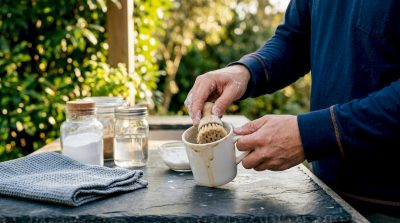
Quick start: wet the inside of your mug, sprinkle in a teaspoon of baking soda, rub it into a paste with your finger or a soft sponge, wait two minutes, then rinse. That’s it for most fresh-to-moderate stains.
Two safety notes before you start: never use bleach on drinkware (more on that below), and always test any method on a small hidden area of decorated or hand-painted mugs before going all in.
Table of Contents
- How to remove coffee stains from a mug with baking soda
- Does a white vinegar soak really work on stubborn stains?
- Using effervescent tablets for an easy, low-effort soak
- Salt and lemon: a gentle scrub for light stains
- Dish soap and hot water for fresh coffee spills
- Which tools are safe to use, and what should you avoid?
- Does the right method depend on your mug material?
- What to do when the stain won’t budge
- Simple habits that prevent coffee stains from forming
- Why do coffee stains stick so stubbornly?
- Key Takeaways
- The stain that made me rethink my whole mug routine
- When it’s time to replace your mug instead
- Useful sources and further reading
How to remove coffee stains from a mug with baking soda
Baking soda’s mild alkalinity neutralizes tannins and its fine grit lifts staining without harsh chemicals. It’s the right first move for most mugs.
Paste method (light to moderate stains): Mix one teaspoon of baking soda with just enough water to form a thick paste. Apply it directly to the stained area, then scrub gently using a soft sponge or cloth in small circular motions. Let it sit for two to five minutes before rinsing with warm water.
Soak method (set-in stains): Add baking soda to a mug filled with hot water. Let it soak for a short time, then scrub lightly and rinse. The longer soak gives the alkaline solution more time to loosen the tannin bond.
Choose the paste for surface-level brown rings and the soak when staining covers most of the interior. Both are safe for ceramic, porcelain, and stainless steel interiors.

Pro Tip: Use a gentle circular motion rather than hard back-and-forth scrubbing. Circular pressure distributes force evenly and reduces the risk of micro-scratching glazed surfaces. Skip the paste entirely on decorated or powder-coated exteriors and stick to soaking only.
Does a white vinegar soak really work on stubborn stains?
Yes, and it often outperforms scrubbing on stains that have had time to set. Vinegar chemically breaks down tannin bonds, making it a strong second step when baking soda alone isn’t enough.
- Fill the mug halfway with equal parts white vinegar and warm water.
- Let it soak for at least 30 minutes. For heavily set stains, leave it overnight.
- Pour out the solution and scrub lightly with a soft sponge.
- Rinse thoroughly with warm water two or three times to clear the vinegar smell.
- If a faint odor remains, a quick wash with dish soap finishes the job.
Vinegar is safe on plain ceramic, glass, and stainless steel interiors. Avoid prolonged soaks on mugs with decorative decals or painted exteriors, since acetic acid can soften adhesives and fade some finishes over time. When in doubt, test on a hidden spot first.
Using effervescent tablets for an easy, low-effort soak
Denture cleaning tablets are one of the most underrated tools for removing coffee stains, especially from travel mugs and insulated drinkware where a brush can’t easily reach the bottom.
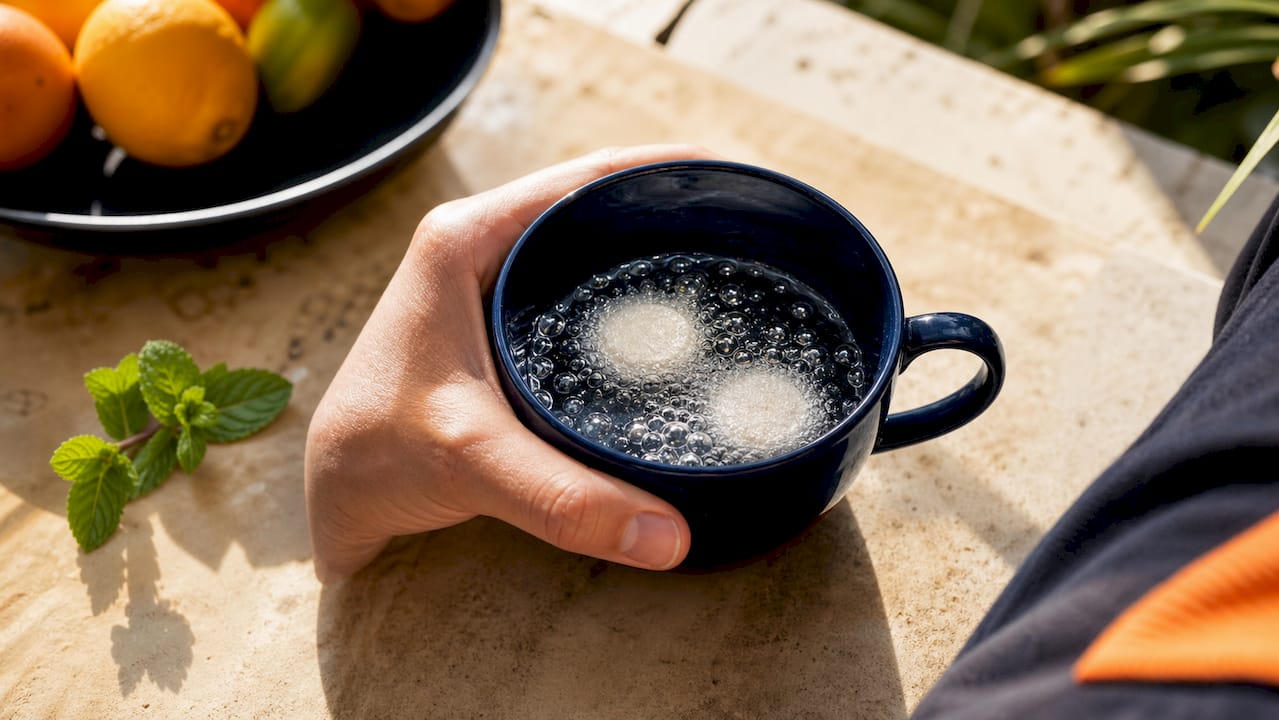
Drop one or two tablets into the mug filled with warm (not boiling) water and let the fizzing action work for 15–30 minutes. The effervescent action loosens surface staining on ceramic and stainless steel interiors without any scrubbing at all. Rinse well afterward.
This method works best on plain ceramic and stainless steel interiors. It’s not ideal for mugs with decorated exteriors submerged in the solution, and you should keep the tablet solution away from vacuum-seal gaskets on insulated lids since prolonged chemical exposure can degrade rubber seals.
Pro Tip: If fizzing alone doesn’t fully clear the stain, follow the soak with a quick 30-second scrub using a bottle brush. The tablet loosens the bond; the brush finishes the lift. Together, they handle most set-in stains without any harsh chemicals.
Salt and lemon: a gentle scrub for light stains
This method is old-school and genuinely useful for light, recent stains on glass mugs or plain undecorated ceramic. The acid in lemon juice provides mild bleaching action while coarse salt acts as a physical abrasive.
- Cut a lemon in half and sprinkle coarse salt (kosher or sea salt) directly onto the cut face.
- Rub the salted lemon over the stained interior using light pressure.
- Let the juice sit for one to two minutes.
- Rinse thoroughly with warm water.
The combination of citric acid and physical abrasion lifts surface tannin deposits without any chemical cleaners. It’s a great pick when you want something completely natural and you’re dealing with a stain that’s only a day or two old.
Skip this method on mugs with metallic trim, painted rims, or decorative glazes. Citric acid can dull metallic accents and weaken certain decorative finishes with repeated use.
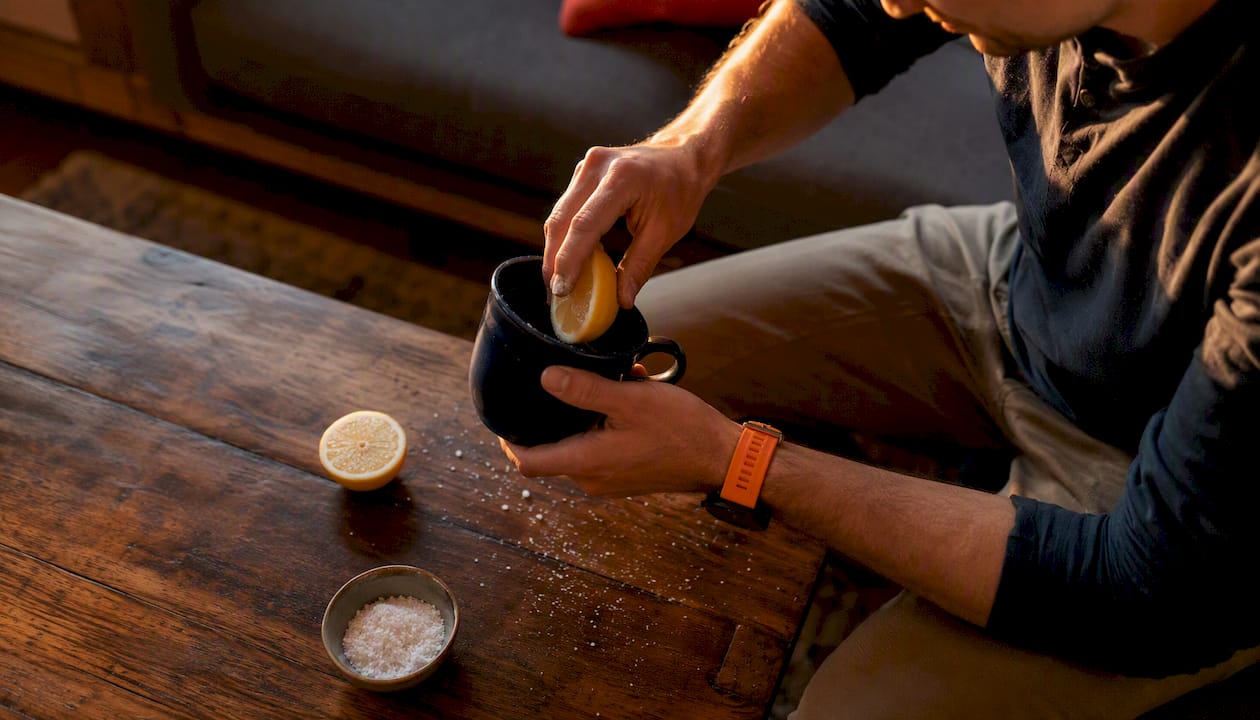
Pro Tip: If you’re working on a decorated rim, squeeze a small amount of lemon juice onto a soft cloth instead of rubbing the salted lemon directly on the surface. You get the acid benefit without the abrasive risk.
Dish soap and hot water for fresh coffee spills
For a spill that just happened, this is your fastest move. Hot water and a squirt of dish soap, left to soak for five to ten minutes, will lift a fresh coffee stain before the tannins have a chance to fully bond to the surface.
Fill the mug with the hottest tap water you have, add a small squeeze of dish soap, and let it sit. No scrubbing needed for very fresh stains. A light wipe with a soft sponge after soaking is usually all it takes.
A boiling-water rinse can work on plain ceramic and glass mugs, but skip it for insulated vacuum mugs. Rapid temperature changes can stress the vacuum seal over time, reducing the mug’s thermal performance.
Pro Tip: The moment you finish your coffee, give the mug a quick rinse with hot water before setting it down. That 10-second habit prevents most stains from ever setting in the first place.
Which tools are safe to use, and what should you avoid?
The right tool makes a real difference. Using the wrong one can scratch a glaze, dull a finish, or leave a mug worse off than the stain did.
Safe tools: soft sponges, nylon bottle brushes, non-abrasive scrubbing pads, and microfiber cloths. These clean effectively without scratching ceramic glazes or stainless steel interiors.
Avoid: steel wool, metal scrubbing pads, and anything labeled “heavy-duty abrasive.” These scratch glazed surfaces permanently and can damage powder-coated finishes on insulated mugs.
Magic Eraser (melamine foam): it works on some surface coffee rings but can dull glossy finishes with repeated use. Always test on an inconspicuous area before using it on the full interior.
Bleach is not a safe option for drinkware. Beyond potential material damage, bleach can leave chemical residues on food-contact surfaces that are unsafe to ingest. Every method in this guide achieves better results without it.
Does the right method depend on your mug material?
Absolutely. The same paste that’s perfect for a plain ceramic mug can damage a hand-painted one. Here’s a quick breakdown:
| Mug Type | Safe Methods | What to Avoid |
|---|---|---|
| Plain ceramic / porcelain | Baking soda paste, vinegar soak, lemon + salt, dish soap | Steel wool, bleach |
| Decorated / hand-painted | Gentle soak only (vinegar or denture tablet), soft sponge | Abrasive pastes, citric acid on rims, prolonged acid soaks |
| Stainless steel interior | Baking soda soak, denture tablet, soft bottle brush | Steel wool, dishwasher (can cause pitting) |
| Insulated / vacuum-sealed | Denture tablet soak, baking soda with soft brush | Boiling water, dishwasher heat, steel wool on powder coat |
Steel wool on powder-coated or vacuum-sealed mugs can scratch the finish and weaken the vacuum seal, shortening the mug’s thermal performance. Stick to soft brushes and mild soaks for any insulated drinkware.
What to do when the stain won’t budge
Set-in stains need a patient escalation plan, not harder scrubbing. Work through these steps before giving up:
- Start with a 30-minute vinegar soak or a denture tablet soak.
- If the stain lightens but doesn’t clear, follow with a baking soda paste scrub.
- Still there? Try an overnight soak in equal parts white vinegar and warm water, then a baking soda scrub the next morning.
- Repeat once if needed, but don’t exceed two overnight soaks on the same mug.
Check your soak water. Tinted water during a soak means the stain is actively lifting from the surface. Clear water after 30 minutes means the stain has bonded too deeply for that method to work alone.
When should you replace the mug? If staining has penetrated through the glaze, a persistent odor remains after thorough cleaning, or the vacuum seal on an insulated mug feels compromised, it’s time for a new one. No cleaning method reverses structural damage.
Pro Tip: Write down which method you used and for how long. If you need to repeat the process, you’ll know exactly where to start without over-exposing the finish to repeated chemical soaks.
Simple habits that prevent coffee stains from forming
Prevention takes about ten seconds and saves you a lot of scrubbing later.
- Rinse your mug with hot water immediately after finishing your coffee.
- Wash with dish soap the same day, even a quick 30-second scrub.
- Don’t let coffee sit and cool in the mug. High temperature accelerates tannin bonding, and a cooling mug with residual coffee is a stain waiting to happen.
- Give frequently used mugs a baking soda or vinegar soak once a week.
- For insulated mugs with lids, clean the threading and gasket areas weekly and never store the lid closed while damp.
- Check your mug’s label before putting it in the dishwasher. Insulated and decorated mugs generally do better with hand washing.
Why do coffee stains stick so stubbornly?
Tannins are the compounds that give coffee and tea their color, and they chemically bond to mug surfaces when exposed to heat and time. A simple rinse doesn’t break that bond. You need either an alkaline agent (baking soda), an acid (vinegar or lemon), or effervescent action to loosen the tannin’s grip before scrubbing.
Hard water minerals compound the problem by interacting with tannins and strengthening their adhesion to the surface over time. If you live in a hard-water area and your stains seem unusually stubborn, that’s likely why.
Soaking outperforms scrubbing for set-in stains because it breaks the chemical bond before any physical force is applied. Aggressive scrubbing without soaking first risks scratching the surface without fully removing the stain.
Key Takeaways
Baking soda paste is the safest, most effective first step for removing coffee stains from most mugs, with vinegar soaking as the strongest follow-up for set-in staining.
| Point | Details |
|---|---|
| Start with baking soda | Mix into a paste, apply, wait 2–5 minutes, and rinse. Safe for ceramic and stainless steel. |
| Escalate to vinegar for old stains | An overnight equal-parts vinegar and warm water soak breaks down deeply bonded tannins. |
| Avoid bleach and steel wool | Both can damage mug materials and finishes; safer pantry alternatives work better. |
| Match method to mug material | Decorated and insulated mugs need gentle soaks only. Check the table above before scrubbing. |
| Photodroneguy drinkware | When a mug is too stained or damaged to save, Photodroneguy’s pilot-themed drinkware is worth a look. |
The stain that made me rethink my whole mug routine
Most people attack a stained mug the wrong way. They grab a scrubbing pad and go hard, which scratches the glaze and makes the surface more porous, which means the next stain sets even faster. It’s a cycle that ends with a mug that looks worse every month.
The smarter move is almost always to soak first and scrub second. A 20-minute vinegar soak does more work than five minutes of aggressive scrubbing, and it leaves the surface intact. The science backs this up: tannins bond chemically, and you need chemistry to break them, not just friction.
One more thing worth saying: if a mug has a persistent odor after two thorough cleanings, or if the staining has gone through the glaze, no method will fully restore it. Replacing it isn’t giving up. It’s just practical. A clean mug you enjoy using every morning is worth more than a stained one you keep trying to rescue.
When it’s time to replace your mug instead

Coffee Mug Ceramic – Drone Pilot – 11oz
Sometimes the most practical answer is a fresh start. If your mug has staining that’s penetrated the glaze, a lingering odor that won’t clear, or a compromised vacuum seal, cleaning it further isn’t going to help. A new mug is the right call.
Photodroneguy offers pilot-themed drinkware built for people who spend time outdoors and want gear that actually reflects their passion. Whether you’re looking for a replacement for a worn-out travel mug or just want something that looks as good as your drone setup, the Photodroneguy shop has you covered. Browse the drinkware and accessories collection and find something worth keeping clean.
Useful sources and further reading
- The Kitchn: The Brilliant $1 Way to Clean Stained Coffee Mugs — Practical testing of the baking soda method with clear results.
- The Kitchn: I Tried 5 Methods to Clean Coffee Stains from Mugs — Side-by-side comparison of methods including denture tablets.
- CNET: Why All Your Mugs Have Lingering Coffee Stains — Explains the role of hard water minerals in stubborn staining.
- CNET: 5 Easy Mug-Cleaning Hacks — Covers prevention habits and the effect of heat on tannin bonding.