Free EU/US shipping on orders over €100 | Designed by Pilots, for Pilots

What to pack in your drone flight bag for commercial missions
Every working drone pilot has experienced the sinking feeling of unzipping their case thirty miles from home and realizing a critical piece of kit is sitting on their desk. Maybe it is the short USB-C cable that connects your phone to the controller, a spare microSD card, or the ND64 filter you need for a midday water shoot.
Overpacking is just as bad: hauling a 15-kilogram hard case up a coastal trail wears you out before you even launch. The solution is splitting your gear into a compact grab-and-go flight bag for active shooting and a larger duffle for vehicle transport.
In short: Organize your kit into four zones—aircraft & power, optics & media, site safety & identification (including a UAS pilot patch and glare-blocking pilot cap), and personal comfort—inside a dedicated drone pilot crossbody sling bag or pilot duffle bag.
1. Choosing the right bag: sling bag vs. full duffle
How you carry your equipment changes how fast you can deploy on site. When you are moving between five vantage points on foot, setting a backpack down in wet grass or mud every ten minutes slows you down and gets dirt on your harness.
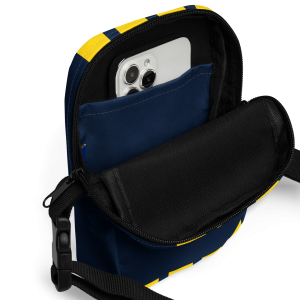
- For mobile shoots and fast battery swaps: A front-swinging drone pilot crossbody sling bag lets you rotate the compartment to your chest, swap a hot battery or ND filter with one hand while standing, and never set your bag on the ground.
- For multi-battery commercial jobs and travel: When you need to pack a landing pad, charging hub, spare layers, and a laptop, our drone pilot duffle bag paired with a padded drone pilot laptop sleeve keeps everything consolidated in the trunk.
2. Optics, media, and the two-card rule
Never rely on a single high-capacity microSD card for a full day of commercial shooting. If a drone clips a branch or loses link over water on flight number four, a single card holds all three previous flights too.
Pack a small weatherproof card wallet with at least four 64GB or 128GB V30/U3 cards and swap cards every time you swap a battery. Alongside your cards, keep a microfiber lens cloth, a rocket air blower to clear dust off the gimbal before installing ND filters (ND8, ND16, ND32, ND64), and two spare pairs of low-noise propellers with the matching mini screwdriver.
3. On-site identification and glare protection
Your flight bag should always hold your personal safety and visibility kit so you are never caught unprepared when a client or site manager asks for credentials:
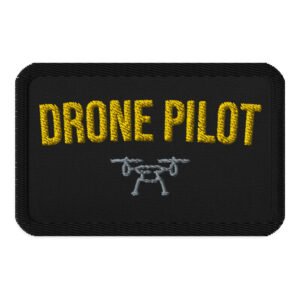
- Hook-and-loop identification patches: Attach an embroidered drone pilot patch or UAS pilot patch to the exterior of your bag, or clip a drone pilot pin button to your lanyard.
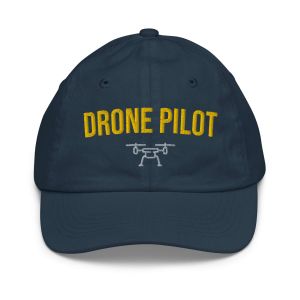
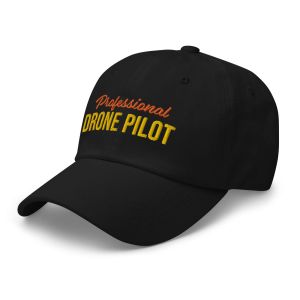
- Dedicated sun and wind headwear: Keep a professional drone pilot cap clipped to your bag strap to cut controller glare (see our guide on how to see your drone screen in bright sunlight), and swap in a thermal drone beanie from October through March.
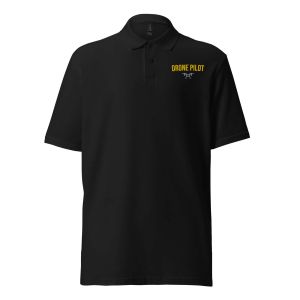
- Backup operator shirt: Keep a rolled EASA edition drone pilot t-shirt or FAA edition drone pilot shirt in your duffle so you always have high-visibility pilot identification when launching from busy public spaces.
4. Hydration, footwear, and post-flight desk workflow
Dehydration and sore feet cause rushed decisions at the end of a long shoot day. Clip a stainless steel drone pilot water bottle to the side of your pack, and wear supportive flat-soled footwear like our aerial photography high-top canvas shoes when covering miles of pavement or rocky trails.
Once you get back to your studio to offload footage and grade D-Log M files, a smooth aerial city view mouse pad or docked yachts desk mat makes long editing timelines much easier on your wrist.
Frequently asked questions about packing a drone bag
Can you pack drone LiPo batteries in checked airline luggage?
No. Airline regulations (IATA and FAA/EASA) strictly require all spare lithium-ion and LiPo drone batteries to be carried in your cabin hand luggage, ideally discharged to 30% storage voltage with terminals protected inside your carry-on flight bag.
What documents should always stay in a commercial drone bag?
Carry laminated copies and offline PDF backups of your operator registration, your A1/A3 and A2 pilot certificates (or FAA Part 107 license), proof of commercial drone insurance, and a basic pre-flight checklist.