Free EU/US shipping on orders over €100 | Designed by Pilots, for Pilots
A1/A3 and A2 drone licence in the EU: what each one lets you fly (2026)
If you searched for an A1 A2 A3 licence, here is the short answer: there are only two certificates, not three. The A1/A3 certificate is one online qualification that covers both the A1 and A3 subcategories. The A2 certificate of competency is an extra step on top of it that lets you fly a C2 drone closer to people. Both are issued by a national aviation authority under Regulation (EU) 2019/947, and both are valid for 5 years.
It is one of the most common questions new pilots in Europe have. Here is what each certificate covers and how to get it.
A1, A2 and A3 are subcategories, not licences
The EU open category covers low-risk flying: most leisure flights and simple commercial jobs. EASA splits it into three subcategories:
- A1: fly over people, but never over assemblies of people.
- A2: fly close to people.
- A3: fly far from people.
Which subcategory you fly in depends on your drone’s class mark (C0 to C4, defined in Regulation (EU) 2019/945) or, for drones without a class mark, on its weight. In all three, the height limit is 120 m above the ground. The pilot certificates simply follow these subcategories: one certificate for A1 and A3, a second one for A2.
The A1/A3 certificate: one online course and test
EASA’s official name for it is the proof of completion for online training for the A1/A3 subcategories. You get it in two steps:
- Complete the online training.
- Pass the online theoretical exam.
There is no practical flight test. The exam details are set nationally. In Ireland, for example, the IAA test has 40 questions and a 75% pass mark.
What A1/A3 lets you fly
- C1 drones (under 900 g) in A1: you can fly where people are around, but you should not plan to fly over uninvolved people, and if it happens, keep it as short as possible. Never over assemblies of people.
- C3 and C4 drones (under 25 kg) in A3: no flying over uninvolved people, and keep 150 m horizontally from uninvolved people and from residential, commercial or industrial areas.
- Legacy and privately built drones under 25 kg in A3: legacy means placed on the market before 1 January 2024 without a class mark. Since that date, a legacy drone of 250 g or more is limited to A3.
When you don’t need it
For a C0 drone (under 250 g), EASA only asks you to read the user manual carefully. Legacy and privately built drones under 250 g need no training either. I still recommend the A1/A3 course: it is the base for A2 and covers basics you use on every flight.
The A2 certificate of competency: the step up
To fly a C2 drone (under 4 kg) in the A2 subcategory, you need the remote pilot certificate of competency for A2. You get it by:
- Holding the A1/A3 proof of completion.
- Conducting and declaring a practical self-training.
- Passing an additional theoretical exam, either at your national aviation authority or proctored online.
In Ireland the A2 exam has 30 questions with a 75% pass mark, and the IAA mentions a practical element run through a training organisation. The practical side varies by country, so check your authority’s page first.
What A2 lets you fly
- C2 drones in A2: no flying over uninvolved people, and keep at least 30 m horizontally from them. With the low-speed mode active, you can reduce this to 5 m. EASA also recommends keeping a distance at least equal to your flight height (the 1:1 rule).
- Everything the A1/A3 certificate covers, since you need it to get A2 in the first place.
One trap I see a lot: the transitional rule that let drones without a class mark under 2 kg fly 50 m from people ended on 1 January 2024. If your mid-size drone has no C2 label, an A2 certificate will not bring it closer to people. It stays in A3.
A1/A3 vs A2 at a glance
| A1/A3 certificate | A2 certificate of competency | |
|---|---|---|
| Official name | Proof of completion for online training | Remote pilot certificate of competency (A2) |
| Subcategories | A1 and A3 | A2 (plus A1 and A3 via the A1/A3 certificate) |
| Drones | C1 in A1; C3, C4, legacy and privately built under 25 kg in A3 | C2 (under 4 kg) |
| Distance from uninvolved people | A1: avoid overflying; A3: 150 m, away from built-up areas | 30 m, or 5 m in low-speed mode |
| How to get it | Online training and online exam | A1/A3 + practical self-training + extra theory exam |
| Exam | Online | At the authority or proctored online |
| Minimum age | 16 (a state may lower it to 12) | 16 (a state may lower it to 12) |
| Validity | 5 years | 5 years |
Pilot certificate vs operator registration
These are two different things, and you often need both. The certificate belongs to the person flying. The registration belongs to the drone operator, usually the owner.
- You register once with the national aviation authority of the country where you live, no matter how many drones you have.
- You receive an operator registration number. It goes on a sticker on every drone you own and must be uploaded into the drone’s remote identification system.
- You do not need to register only if your drone weighs less than 250 g and has no camera or other sensor able to capture personal data, or weighs less than 250 g and is a toy.
- Your registration is valid in every EASA member state, and you cannot register twice. How long it lasts is set by your authority. In Ireland, operators renew every two years.
So a sub-250 g camera drone with a C0 label needs no pilot certificate, but its operator still needs to register. Insurance is a separate point: EASA makes it mandatory above 20 kg, and most member states require third-party cover for lighter drones too. I covered one option in my Coverdrone insurance review.
Minimum age
The general minimum age for remote pilots in the open category is 16. Each state may lower it to 12, but only within its own territory. There are exceptions with no minimum age: toy drones, privately built drones under 250 g, and flying under the direct supervision of a remote pilot who meets the competency requirements.
How to get your A1/A3 and A2 certificates
- Register as an operator with your national aviation authority, if your drone needs it.
- Take the A1/A3 online training and exam. You can do it in any EASA member state you choose, and the certificate is recognised in all of them: the 27 EU countries plus Iceland, Liechtenstein, Norway and Switzerland. EASA warns that some websites sell fake certificates, so use your authority or a provider listed on your authority’s website.
- Add A2 if you fly a C2 drone near people. Do your practical self-training, declare it, and pass the extra theory exam.
- Renew within 5 years. If you revalidate before expiry, you can attend a refresher seminar from your authority or an entity it recognises. If it has already expired, you must show your competence again.
If you prefer to do the training from your sofa, our partner Drone Class runs the training and exam online through dronelicense.eu, and our link gives you a discount on the online training. This is an affiliate link: if you buy through it, PhotoDroneGuy earns a small commission at no extra cost to you.
Gear up after passing your EASA A1/A3 or A2 exam
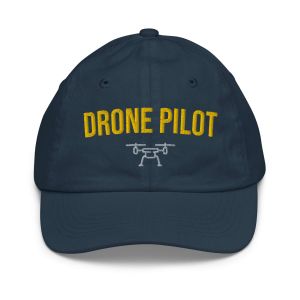
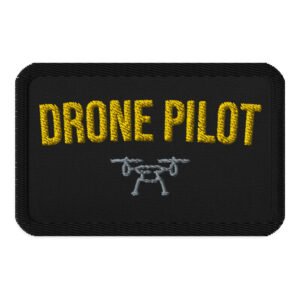
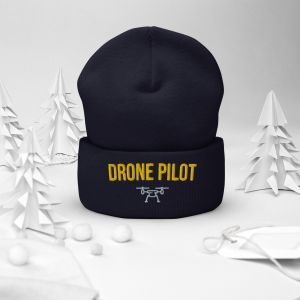
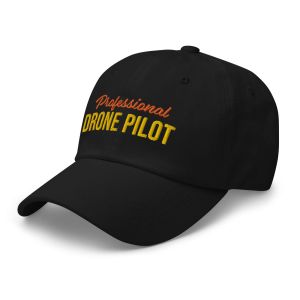
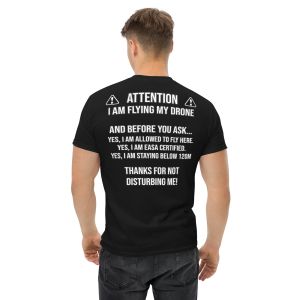
Once you have your certificate, flying in parks or near homes gets easier when bystanders can see you are a certified operator. Many European pilots wear our Attention Flying Drone T-Shirt (EASA Edition) (from €14), whose back print answers the usual questions before anyone asks. Add a Professional Drone Pilot dad hat (from €35.95) to keep the sun off your face, or a UAS pilot patch (from €10.59) for your flight bag. For more on staying undisturbed during takeoff and landing, read our drone pilot hat and patch identification guide and our tips on dealing with bystanders while flying a drone.
Frequently asked questions
Is there a single A1 A2 A3 licence?
No. The A1/A3 certificate covers the A1 and A3 subcategories with one online course and exam. A2 is a separate certificate of competency that you add on top, with practical self-training and an extra theory exam.
Do I need a licence for a drone under 250 g?
Not for a C0 drone, a legacy drone under 250 g, or a privately built drone under 250 g. You still need operator registration if it carries a camera and is not a toy.
Is my A1/A3 or A2 certificate valid in other countries?
Yes. Training done in one EASA member state is recognised in all the others, and the certificate is valid for 5 years.