Free EU/US shipping on orders over €100 | Designed by Pilots, for Pilots

Flying a drone in cold weather: battery care and winter pilot gear
Winter offers some of the cleanest light of the year for aerial photography: low sun angles, mist rising off valleys, and snow-covered ridgelines with zero summer crowds. Yet flying a drone below 5°C introduces two failure points that end winter missions early: sudden lithium-polymer (LiPo) battery voltage drops and a pilot whose hands and head are too cold to fly smoothly.
When you hike you generate body heat, but the moment you stop on an exposed ridge and stand completely still for twenty-five minutes holding a cold aluminum controller, wind chill hits hard. Here is how to protect both your aircraft and your own dexterity during cold-weather operations.
In short: Keep your drone batteries warm above 20°C inside an insulated bag until the exact moment of takeoff, hover for 60 seconds to warm the cells, and layer up with a wind-blocking thermal drone pilot beanie, a heavyweight drone pilot hoodie, and a hot insulated thermal bottle.
How cold temperatures affect drone LiPo batteries
Inside every intelligent flight battery, chemical reactions slow down as the electrolyte cools. Below 10°C, internal resistance rises; below 0°C, a sudden full-throttle climb can cause voltage sag severe enough to trigger a critical low-voltage auto-landing even when your screen shows 55% charge remaining.
Follow three rules for winter battery management:
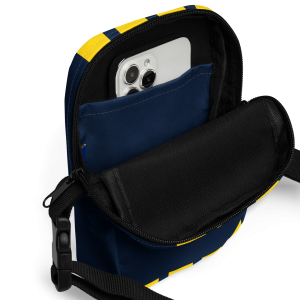
- Pre-warm batteries before leaving home: Fully charge your batteries the night before (never fly in the cold on a partially depleted pack) and store them inside an inner jacket pocket or a dedicated crossbody flight bag with a chemical hand warmer so they start above 20°C.
- Hover at eye level for 60 seconds after takeoff: Do not punch the throttle straight up to 120 meters. Let the drone hover two meters in front of you for a full minute while checking battery temperature in your telemetry menu and inspecting the props for frost.
- Land at 30% instead of 15%: Cold cells drop voltage rapidly at the bottom of the discharge curve. Plan your return so the aircraft touches down with at least 30% battery reserve.
Why pilot warmth is a flight safety issue
Ask any commercial operator who flies winter roof or ski-resort missions what actually limits flight time, and they rarely say the drone. They say their thumbs. As your core and head lose heat in cold wind, your body restricts blood flow to your fingers first (vasoconstriction). Within ten minutes, fine motor control on the gimbal wheel and yaw stick disappears.
Keeping your core and head insulated keeps warm blood flowing to your hands:
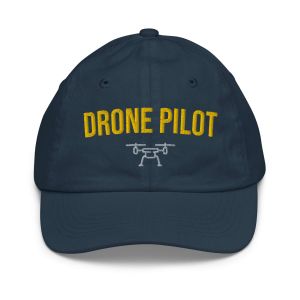
- Lock in heat at the crown and ears: Up to a third of your perceived wind chill comes from exposed ears and forehead while looking up at the sky. Our double-knit winter drone hat thermal beanie fits snugly over your ears without interfering with glasses or FPV goggles.
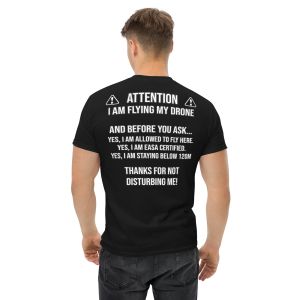
- Layer a fleece-lined hoodie under your wind shell: Standing still requires thicker insulation than walking. A heavyweight drone pilot unisex hoodie with back logo or classic drone pilot hoodie over a breathable cotton pilot t-shirt traps warm air around your torso.
- Bring hot liquids to the launch site: Sipping hot tea or coffee between battery swaps warms your hands and core immediately. Pack our double-wall drone pilot thermal bottle in your bag, or keep a ceramic drone pilot mug waiting in the car.
Watch out for freezing fog and propeller icing
Clean dry air at -5°C is much safer for a drone than damp mist at +1°C. When spinning carbon or plastic propellers slice through freezing fog or low clouds near 0°C, supercooled moisture freezes onto the leading edge of the blades in seconds. That ice ruins the airfoil shape, forces the motors to spin at maximum RPM, and can bring an aircraft down without warning. If you see mist or rime ice forming on trees, stay grounded.
Turn your winter aerial shots into framed wall art
Cold-weather flights reward you with minimalist high-contrast compositions—dark pine forests against fresh snow or icy road curves at blue hour. If you want inspiration for winter framing, explore our winter icy roads framed poster and icy roads aerial print in the PhotoDroneGuy wall art gallery.
Frequently asked questions about winter drone flying
What is the lowest temperature a DJI drone can fly in?
Most consumer and prosumer drones (such as the DJI Air 3 and Mavic 3 series) are rated for -10°C to 40°C, while smaller models like the Mini 3 have a 0°C minimum rating. Always check your manual and monitor battery cell temperature in flight.
Should I bring my drone straight into a warm house after flying in snow?
Before bringing a freezing drone into a humid 22°C room, remove the battery and seal the drone inside your flight bag or a dry zip bag for 30 minutes so condensation forms on the bag rather than inside the gimbal lens and electronics.